The Real Cost of Cheaper Solar & Battery Installers
The guide to getting it right that can save you thousands. Because the cheapest quote upfront is rarely the cheapest system over time.
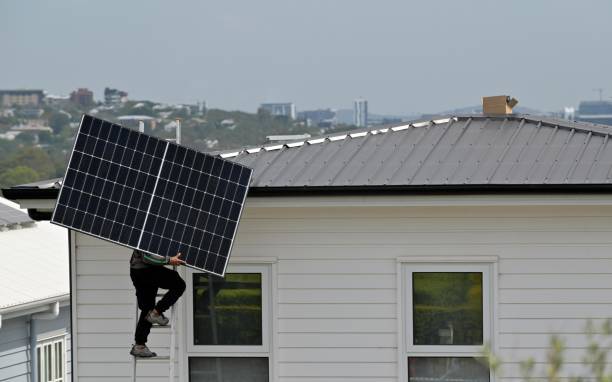
Before you sign anything: The Australian Competition and Consumer Commission (ACCC) has repeatedly flagged the solar industry as one of the highest complaint categories for Australian consumers. Many complaints involve companies that have since collapsed, leaving homeowners with no recourse on warranties or workmanship guarantees.
You’ve done your research. You’ve decided solar is worth it. You’ve reached out to a few companies and the quotes have come back with a $3,000 to $5,000 spread between the cheapest and the most expensive option.
The temptation to go with the lowest number is completely understandable. But here is what most Australians don’t realise until it’s too late: the cheapest installer on paper is very rarely the cheapest system over the lifetime of your investment.
In fact, going with the wrong company can cost you more than the total price difference within the first two years. Faulty equipment, poor installation, voided warranties, missed rebates, and undersized systems are not rare outcomes. They happen to thousands of Aussie households every year. And the companies responsible for them are often no longer trading when the problems surface.
This guide is designed to make sure that doesn’t happen to you.
Why Cheap Quotes Exist (And What’s Usually Been Cut)
No installer can survive long term by selling quality products at a significant loss. When a quote is thousands of dollars below competitors, something has been cut. The question is what.
Here are the most common places corners get cut to produce a low headline price.
Tier 3 panels and budget inverters
Solar panels are broadly categorised into three tiers. Tier 1 panels come from manufacturers with a proven track record, bankable financials, and in house manufacturing processes. Tier 2 and Tier 3 panels are cheaper for a reason. They often use lower quality cells, have higher degradation rates (meaning they lose efficiency faster over time), and are manufactured by companies with no Australian service presence.
An installer selling a 6.6 kW system at $3,500 when the market average is closer to $6,500 to $8,000 is almost certainly using Tier 2 or Tier 3 components. Those panels may produce meaningfully less power within five years, and the company manufacturing them may not exist within ten.
Undersized systems
One of the most common tactics used by budget installers is quoting for a system that looks right on paper but is too small for your actual usage. A 6.6 kW system at a low price can still look impressive in a quote. But if your home needs 8 to 10 kW to genuinely offset your bills, you’ll spend years buying grid power you didn’t need to, and eventually pay for an upgrade anyway.
Poor quality workmanship
Installation quality is invisible until it becomes a problem. Budget operators often use subcontractors paid by the job rather than experienced employed electricians. Incorrect roof penetration sealing leads to leaks. Poor cable management creates fire risks. Incorrectly oriented panels reduce output by 15 to 25% from day one. These aren’t hypothetical risks. They’re documented outcomes from Consumer Affairs investigations across multiple states.
Missing or voided warranties
A legitimate solar system comes with three distinct warranties: a product warranty on the panels (typically 10 to 15 years), a performance warranty guaranteeing output levels (typically 25 years), and a workmanship warranty from the installer (typically 5 to 10 years). Budget operators frequently provide shortened workmanship warranties, use products where the Australian warranty is actually held by a third party importer rather than the manufacturer, or simply go out of business before any warranty claim can be made.
Rebate harvesting without proper installation
This is the most serious issue. Some low cost operators exist primarily to collect the Small Scale Technology Certificate (STC) rebate on your behalf, install cheaply, and move on. Your system qualifies for the rebate, they pocket the discount, and the quality of what was installed is a secondary concern. The Clean Energy Regulator has actioned hundreds of complaints in this category.
The maths that matters: A quality 6.6 kW system from a reputable installer might cost $7,500 after rebates. A budget system might cost $4,200. The $3,300 difference sounds significant. But if the budget system underperforms by just 15% over 10 years and requires one service call, that gap disappears. If it requires a full inverter replacement at year four (a common outcome with budget inverters), you’re already behind.
The Real Numbers: Cheap vs Quality Over 10 Years
Let’s make this concrete with a real world comparison for a typical 3 to 4 person household in Queensland.
The quality system costs $1,500 less over 10 years despite being $3,300 more upfront. And that’s before accounting for the annual cleaning service and system health check that a quality installer includes. Dirty panels lose 5 to 25% of their output depending on your location and season. A health check catches faults and degradation early, before they quietly drain your savings month after month. Neither of those things comes with the $4,200 quote.
Red Flags: What to Watch For in a Solar Quote
Most homeowners aren’t solar experts. You shouldn’t have to be. But knowing what to look for in a quote will protect you from the majority of bad operators.
Green Flags: Signs You’re Dealing With a Good Installer
Not Sure Which Installers Are Worth Talking To?
Compare Your Rates connects Aussie homeowners with vetted, CEC accredited solar and battery installers. Free, no obligation, and you stay in control.
The Battery Question: Does It Apply Too?
Everything above applies equally to battery storage, and in some ways the stakes are even higher. A battery system represents a larger upfront investment (typically $8,000 to $16,000 after rebates for a quality setup), involves more complex electrical work, and sits inside or attached to your home rather than on your roof.
Budget battery installers cut corners in the same ways: cheaper cells, shorter warranties, unqualified subcontractors, and systems not correctly sized for your household’s actual overnight usage. A battery that can’t actually cover your evening consumption is not a bargain at any price.
The fire risk nobody talks about
Here is something the solar industry rarely puts front and centre, and budget installers almost never mention at all. Home batteries do not come with inbuilt fire suppression as standard. Most do not have one at all.
This matters more than most homeowners realise. As a battery ages, as its cells degrade, or if it has been installed in a location with inadequate ventilation or is exposed to sustained heat, the risk of thermal runaway increases. Thermal runaway is the technical term for what happens when a battery cell overheats, causes neighbouring cells to overheat, and triggers a chain reaction that can result in fire. It is not common. But it happens, and when it does, it happens fast.
Quality battery systems from reputable manufacturers include built in thermal management systems that monitor cell temperature continuously and shut the unit down before a dangerous threshold is reached. Some higher grade residential batteries now include integrated fire suppression as a standard feature, designed to contain a thermal event before it can spread to the structure of your home.
Budget batteries frequently lack adequate thermal management. The cells are cheaper, the monitoring is less sophisticated, and the safety architecture is thinner. You may save $3,000 upfront on a budget battery. But that battery is bolted to the wall of your garage, your laundry, or the side of your house. The consequences of a thermal event in any of those locations are not $3,000 consequences.
This is not a scare tactic. It is a specification question. When comparing battery quotes, ask every installer directly: what thermal management system does this battery use, and does it include integrated fire suppression? A quality installer will answer this without hesitation. A budget installer will often change the subject. That response tells you everything you need to know about which system you are being offered and why it is priced the way it is.
The right battery for your home is one that has been engineered with safety as a non negotiable, installed by someone who understands the requirements, and positioned and ventilated correctly from day one. This is not where you want to find out the cheap option had a flaw.
From May 2026, the federal STC rebate structure for batteries changes, with tiered support based on system size. Getting the battery sizing right before that date matters financially as well as practically. The complete 2026 solar and battery storage guide walks through how the rebate tiers work and what sizes make sense for different households.
Questions to ask any battery installer specifically
Beyond the general checks above, ask any battery installer these questions before committing.
| Question | What a Good Answer Looks Like |
|---|---|
| What battery chemistry is being used? | Lithium Iron Phosphate (LFP) is safer and longer lasting than older NMC chemistry. Quality installers will explain the difference without being asked. |
| What is the cycle life of the battery? | At least 6,000 cycles at 80% depth of discharge. Budget batteries often spec 3,000 to 4,000 cycles, meaning a significantly shorter usable life. |
| Does it have backup capability in a blackout? | Not all batteries automatically provide backup power during a grid outage. If this matters to you, confirm explicitly. Some require additional switchgear at extra cost. |
| Who holds the battery warranty in Australia? | The manufacturer or an established Australian subsidiary. Not a small importer that could disappear. |
| What happens if the battery needs service in year 6? | They should be able to name a service pathway. If the answer is vague, that’s a problem you’ll inherit. |
| Does this battery include thermal management and fire suppression? | A quality answer names the thermal management system specifically and confirms whether integrated fire suppression is included. Budget installers often cannot answer this at all. That is your answer. |
| Where will the battery be installed and is that location correctly ventilated? | The installer should specify placement and confirm it meets manufacturer ventilation requirements. A battery installed in a poorly ventilated space runs hotter, degrades faster, and carries a higher thermal risk over time. |
How to Actually Compare Installers Without Being an Expert
The good news is that you don’t need to become a solar engineer to protect yourself. You need to ask the right questions and use a comparison service that has already done the vetting work for you.
Get at least three quotes. Not because you should automatically pick the middle one, but because having three detailed, itemised proposals lets you see what’s actually variable versus what every company is quoting similarly. If two of the three quotes are around $7,500 and one is at $4,000, that $4,000 quote should now look very different to you than it did before.
Check ABN registration dates and CEC accreditation independently. Don’t just take the installer’s word for it. The CEC publishes an online database of accredited installers and approved retailers. It takes two minutes to verify.
Read Google reviews critically. Look for patterns, not just the average score. If multiple reviews mention communication issues after installation or difficulty claiming warranty work, that’s a signal.
Use a comparison service that pre screens for quality. This is where Compare Your Rates adds the most value. Rather than starting cold with companies you’ve found via an ad, we connect homeowners with installers who have been assessed against quality and accreditation standards. You still get multiple quotes. You still make the final decision. But you start from a shortlist that has already removed the most common risks.
Worth knowing: If you’re also exploring government rebates and upgrade programs for your home, the Rebates and Upgrades section at Compare Your Rates covers what’s currently available by state and how to access them. Many solar installs qualify for additional state level support on top of the federal STC rebate.
What Does a Good Solar Quote Actually Look Like?
Before you compare anything, it helps to know what a legitimate, detailed quote should contain. Use this as a checklist when you receive proposals from any installer.
| Quote Item | Should Be Present |
|---|---|
| Installer’s CEC accreditation number | Yes, every time |
| Full name and model of solar panels | Yes, specific model not just brand |
| Full name and model of inverter | Yes, specific model not just brand |
| Number of panels and total system kW | Yes |
| STC rebate amount shown separately | Yes, so you can verify it’s correct |
| Workmanship warranty duration | Minimum 5 years |
| Panel product warranty duration | Minimum 10 years, ideally 15 |
| Panel performance warranty duration | 25 years from a credible manufacturer |
| Estimated annual generation (kWh) | Based on your location and roof, not generic |
| Monitoring system included | Named app or platform |
| “Premium panels” without named brand | Walk away |
| Verbal warranty not in writing | Not acceptable |
The Bottom Line
Solar and battery storage is one of the best financial decisions an Australian homeowner can make in 2026. The economics are genuinely strong, the technology is proven, and the rebate support makes the investment accessible for most households.
But it is an investment. And like any investment, the quality of what you put in determines the quality of what you get back. A system that performs at 85% of its rated capacity for 10 years instead of 98% doesn’t just underperform on paper. It means you’re buying grid power you paid to avoid, year after year.
The companies cutting corners on your solar system aren’t saving you money. They’re transferring their costs onto your future self.
Getting multiple quotes from vetted, accredited installers takes about the same amount of time as accepting the first one. The difference in outcome over 10 to 25 years can run into thousands of dollars.
Compare Your Rates is free to use, you stay in control of the decision, and you start from a shortlist of installers who have already been assessed. That’s a better starting point than most Australians get.
Related Articles





Compare Your Rates — Free Solar Comparison
Compare Vetted Solar Installers in Your Area
Get quotes from CEC accredited installers without the cold calls, pressure tactics, or guesswork. Free to use, no obligation, and you stay in control.
No sign up required · 100% free · CEC accredited installers only