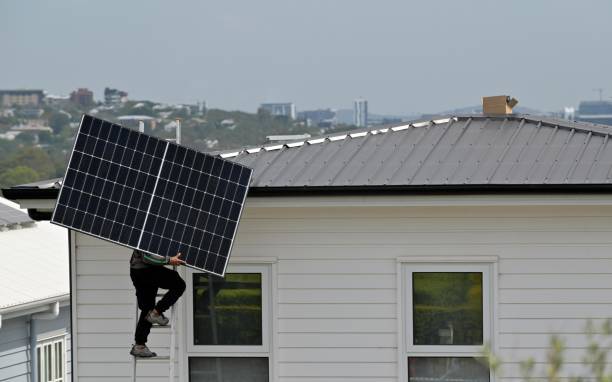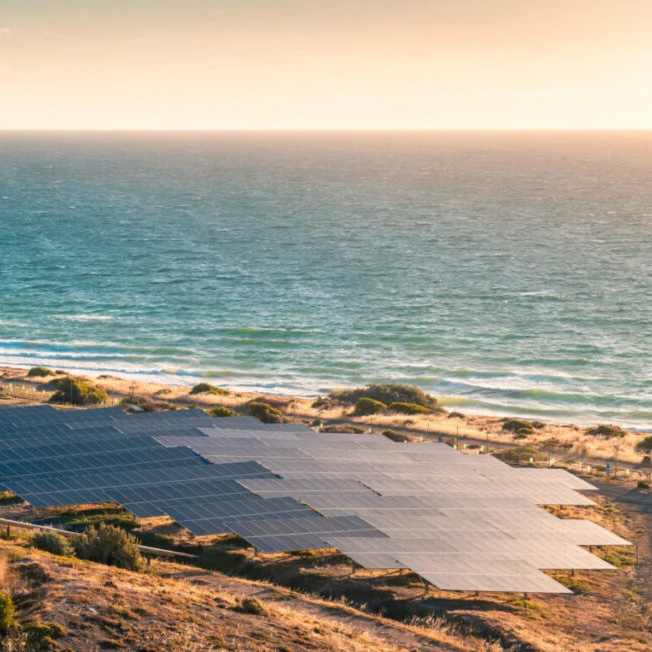
Over 4.3 million Australian households have installed solar panels, making Australia a world leader in residential solar adoption. If you’re considering joining them, this guide will help you understand how solar works, what to expect, and how to make the right decision for your home.
How Solar Power Works in Your Home
The Basics of Solar Energy
Solar panels convert sunlight into electricity through photovoltaic cells. When sunlight hits these cells, it creates an electrical current that can power your home. A typical residential solar system includes:
- Solar panels mounted on your roof to capture sunlight
- An inverter that converts the DC electricity from panels into AC electricity your home uses
- Your existing electrical panel that distributes power throughout your home
- A bi-directional meter that tracks electricity flowing to and from the grid
What Happens to Your Solar Power
During the day, your solar system generates electricity that follows this priority:
- First: Powers your home’s immediate electricity needs
- Second: Charges your battery (if you have one installed)
- Third: Exports excess electricity to the grid (you receive a feed-in tariff payment)
At night or on cloudy days when your panels aren’t generating enough power, you either draw from your battery or import electricity from the grid as usual.
Understanding Solar + Battery Systems
Adding a battery to your solar system stores excess solar energy for use when the sun isn’t shining. This is particularly valuable because:
- Evening peak rates are typically when electricity is most expensive
- Your solar panels produce most power midday when you may use less electricity
- Storing solar power lets you use your own free energy during expensive evening hours instead of buying from the grid
The average Australian household with solar and battery storage can reduce grid electricity consumption by 70-90%, though results vary based on system size, energy usage patterns, and household routines.
Understanding System Sizes and What You Need
Solar Panel System Sizing
Solar systems are measured in kilowatts (kW), which indicates how much power they can generate under ideal conditions:
- 3-5 kW systems: Suitable for small households with low energy consumption (1-2 people, minimal daytime usage)
- 6.6 kW systems: The most common size for average Australian homes (3-4 people, typical appliance usage)
- 8-10 kW systems: Larger homes with higher energy consumption, multiple air conditioners, pool pumps, or electric vehicle charging
- 10+ kW systems: Large homes or those planning significant future electrical loads
A helpful rule of thumb: A 6.6 kW system typically generates 24-30 kWh of electricity per day, depending on your location, roof orientation, and season. Compare this to your current daily usage shown on your electricity bill.
Battery Storage Sizing
Batteries are measured in kilowatt-hours (kWh), which indicates how much energy they can store:
- 5-8 kWh: Stores enough for essential evening loads (lighting, refrigeration, a few hours of TV)
- 10-14 kWh: Covers typical evening usage for most households, enough to get through to the next morning
- 15-20 kWh: Larger households or those wanting energy independence, backup power capability
- 20+ kWh: Large homes, those with electric vehicle charging needs, or seeking maximum grid independence
Understanding your usage: Check your electricity bill for daily consumption. If you use 25 kWh per day and your solar generates 30 kWh on a sunny day, you’ll have 5 kWh of excess. A 10 kWh battery could store two days worth of this excess for evening use.
How Government Rebates Actually Work
Understanding the rebate system helps you make informed financial decisions about solar and battery installation.
Federal Solar Panel Rebates (STCs)
The Small-scale Technology Certificate (STC) program provides the main federal rebate for solar panels:
How it works:
- Your solar system generates certificates based on the amount of electricity it will produce over its first 10 years
- These certificates have a market value (currently around $38-40 each)
- A 6.6 kW system in Brisbane generates approximately 105 STCs
- 105 STCs × $39 = approximately $4,095 rebate
- Most installers apply this as an upfront discount to your purchase price
Important details:
- The number of STCs your system generates depends on your location (more sun = more STCs) and system size
- STC values decrease every January by roughly 10% as the program phases out toward 2030
- This is why the same system costs more each year—not because prices are rising, but because government support is reducing
Federal Battery Rebates
As of July 1, 2025, batteries became eligible for STCs similar to solar panels, but with different rules:
Current structure (until April 30, 2026):
- Batteries generate STCs based on their storage capacity
- Most installers apply this as an upfront discount (typically 25-30% of battery cost)
- Example: A 13.5 kWh battery might receive $4,000-5,000 in STC rebates
Changes from May 1, 2026: The federal government is introducing a tiered approach to encourage appropriately-sized systems:
- 0-14 kWh batteries: Continue receiving 100% of STC value
- 14-28 kWh batteries: Receive 75% of STC value (the portion over 14 kWh gets reduced support)
- 28+ kWh batteries: Receive 50% of STC value (the portion over 28 kWh gets reduced support)
Why this change? The government wants to ensure taxpayer-funded rebates support systems sized appropriately for typical household needs rather than subsidizing extremely large installations.
State and Territory Programs
Many states offer additional support that can be combined with federal rebates:
Victoria – Solar Homes Program:
- Rebates up to $1,400 for solar panels
- Interest-free loans available
- Income and property value limits apply
South Australia:
- Battery rebates available through the Home Battery Scheme
- Virtual Power Plant programs that provide additional benefits for sharing your battery capacity during peak demand periods
- Concession card holders can access special solar offers
Western Australia:
- Battery rebates up to $5,000 (Synergy customers) or $7,500 (Horizon Power customers)
- No-interest loans available
New South Wales:
- Peak Demand Reduction Scheme offers incentives for households with battery storage to participate in grid stabilization
- Virtual Power Plant programs provide ongoing payments
Australian Capital Territory:
- Sustainable Household Scheme offers zero-interest loans from $2,000 to $15,000 for solar and batteries
Queensland:
- Interest-free loans for solar panels and battery storage through the Affordable Energy Plan
Tasmania:
- Battery rebates available under the Battery Home Scheme
State programs change regularly based on budget allocations and policy priorities, so checking current availability is important when making your decision.
Real Costs and Realistic Savings
What Solar and Battery Systems Actually Cost
Understanding total costs helps you make informed decisions. Here are typical price ranges for quality systems in February 2026:
Solar panels only:
- 6.6 kW system: $4,500-7,500 after rebates (quality equipment, reputable installer)
- 10 kW system: $6,500-10,000 after rebates
Solar + battery packages:
- 6.6 kW solar + 10 kWh battery: $12,000-16,000 after all rebates
- 10 kW solar + 13.5 kWh battery: $15,000-20,000 after all rebates
Price variations depend on equipment quality, roof complexity, installer reputation, and your location. The cheapest quote isn’t always the best value—warranty terms, equipment quality, and installer experience matter significantly.
Understanding Your Potential Savings
Savings depend on multiple factors, making generic claims unreliable. Here’s how to estimate yours:
Step 1: Know your current costs Check your electricity bill for:
- Daily electricity usage (kWh)
- Cost per kWh (typically 25-35 cents, varying by state and retailer)
- Daily supply charge
Step 2: Estimate solar generation A 6.6 kW system in Brisbane generates approximately:
- Summer: 32-35 kWh per day
- Winter: 20-24 kWh per day
- Annual average: 26-28 kWh per day
(Other locations vary: Sydney similar, Melbourne slightly lower, Perth slightly higher, Darwin significantly higher)
Step 3: Calculate savings scenarios
Scenario A – Solar only, typical daytime usage: If you use 30 kWh daily and your 6.6 kW system generates 27 kWh:
- Self-consumed during day: ~10 kWh @ 30c = $3.00 saved
- Exported to grid: ~17 kWh @ 8c feed-in tariff = $1.36 earned
- Still import at night: ~20 kWh @ 30c = $6.00 cost
- Daily saving: approximately $4.36 (was ~$9.00, now ~$4.64)
- Annual saving: approximately $1,590
Scenario B – Solar + 10 kWh battery: Same household adds battery:
- Self-consumed during day: ~10 kWh @ 30c = $3.00 saved
- Battery charged: ~10 kWh stored for evening use
- Battery powers evening: ~10 kWh @ 30c = $3.00 saved
- Exported to grid: ~7 kWh @ 8c = $0.56 earned
- Still import at night: ~10 kWh @ 30c = $3.00 cost
- Daily saving: approximately $6.56 (was ~$9.00, now ~$2.44)
- Annual saving: approximately $2,400
These are simplified examples. Your actual results depend on your specific usage patterns, electricity rates, and system performance.
Payback Periods
Using the examples above:
Solar only:
- System cost after rebates: $6,000
- Annual savings: $1,590
- Payback period: approximately 3.8 years
Solar + battery:
- System cost after rebates: $14,000
- Annual savings: $2,400
- Payback period: approximately 5.8 years
After payback, systems continue generating savings for 20+ years. Over a 25-year lifespan, a $14,000 solar and battery system could save $60,000+ in today’s electricity prices (more if prices continue rising).
What Modern Solar Technology Offers
Solar Panel Technology
Modern solar panels are remarkably reliable:
- Efficiency: Current panels convert 19-22% of sunlight into electricity (premium panels reach 23-24%)
- Degradation: Quality panels lose only 0.3-0.5% efficiency per year, maintaining 85-90% output after 25 years
- Warranties: Most panels carry 25-year performance warranties and 10-15 year product warranties
- Durability: Designed to withstand hail, high winds, and extreme temperatures
Panel types:
- Monocrystalline (most common): Higher efficiency, better performance in low light, slightly more expensive
- Polycrystalline (less common now): Slightly lower efficiency, lower cost, still reliable
- Premium panels (Sunpower, LG, REC): Highest efficiency, best warranties, premium pricing
Battery Technology
Modern lithium-ion batteries are safe, reliable, and increasingly affordable:
- Lifespan: Most batteries warranty 10 years and 6,000-10,000 cycles
- Round-trip efficiency: 90-95% (you get back 90-95% of the energy you store)
- Depth of discharge: Most modern batteries can use 90-100% of their stated capacity
- Safety: Australian standards require rigorous safety testing and proper installation
Common battery brands:
- Tesla Powerwall 2/3: 13.5 kWh, integrated system, strong brand recognition
- BYD Battery-Box: Modular design, expandable, good value
- Alpha ESS: Various sizes, reliable performance
- Sungrow: Growing market presence, competitive pricing
- Enphase: Modular AC-coupled design, easy expansion
Inverter Options
Inverters convert DC power from panels to AC power your home uses:
- String inverters: One inverter for your whole system, most common, cost-effective
- Microinverters: One small inverter per panel, better for shaded roofs or complex layouts
- Hybrid inverters: Can manage both solar panels and battery storage in one unit
Quality inverters from Fronius, SMA, Enphase, SolarEdge, and GoodWe typically carry 5-10 year warranties with extensions available.
Making an Informed Decision
Questions to Ask Yourself
Before comparing quotes, consider:
- What’s your current electricity usage? (Check several recent bills)
- When do you use most electricity? (Daytime vs. evening affects battery value)
- How long do you plan to stay in this home? (Affects payback period importance)
- Is your roof suitable? (North-facing ideal, but east/west works well too)
- What’s your budget? (Start with what you can comfortably afford)
- What’s your primary goal? (Maximum savings, energy independence, environmental impact, or backup power?)
Questions to Ask Installers
When comparing quotes:
- What specific equipment are you proposing? (Get exact model numbers)
- What warranties are included? (Equipment vs. installation warranties)
- How long have you been installing solar? (Experience matters)
- Are you a Clean Energy Council accredited installer? (This is important)
- What’s the expected generation of this system for my location? (Get realistic numbers)
- How will you handle my roof type/complexity? (Understand any challenges)
- What’s your typical installation timeline? (Helps you plan)
- What ongoing support do you provide? (Post-installation service matters)
Red Flags to Watch For
Be cautious of:
- Quotes significantly cheaper than others (often use lower-quality equipment or cut corners)
- Pressure tactics or “offer expires today” urgency
- Guarantees of specific savings amounts without understanding your usage
- Reluctance to provide equipment specifications or warranty details
- No physical business address or limited online presence
- Promises that seem too good to be true
Understanding the Timeline
A typical solar installation involves:
- Initial consultation: Installer assesses your roof and discusses options (1-2 weeks to schedule)
- Quote and design: Receive detailed proposal with system design (3-7 days)
- Contract signing: Review and sign agreement
- Network approval: Installer applies to your electricity distributor (2-6 weeks typically)
- Installation: Actual installation usually takes 1-2 days
- Inspection and connection: Final approvals and grid connection (1-2 weeks)
From contract signing to generating solar power typically takes 4-10 weeks, varying by location and installer workload.
Common Myths and Misconceptions
“Solar doesn’t work on cloudy days”
Reality: Solar panels produce electricity in cloudy conditions, just at reduced levels. They still generate 10-25% of their peak capacity on overcast days. Your system generates power whenever there’s daylight, not just direct sunshine.
“Batteries don’t last long enough to be worth it”
Reality: Modern lithium batteries carry 10-year warranties and typically last 12-15 years. While they do degrade over time, they retain 70-80% capacity even after warranty expiration. For many households, the extended savings and energy security justify the investment.
“You need perfect north-facing roof to make solar worthwhile”
Reality: North-facing is ideal in Australia, but east and west-facing roofs work very well too. East panels generate more morning power, west panels more afternoon/evening power. Even south-facing can work with the right system design, though it’s less efficient.
“Solar panels require constant maintenance”
Reality: Solar panels are remarkably low-maintenance. Rain usually keeps them clean enough. Most experts recommend professional cleaning every 1-2 years if you’re in a dusty area or near the coast, but many systems go years without any maintenance.
“You should wait for better technology”
Reality: Solar technology improves incrementally, not dramatically. Waiting for the “next big thing” means years of paying full electricity prices and missing current rebates. Today’s technology is mature, reliable, and backed by long warranties.
“Going off-grid is practical for suburban homes”
Reality: Staying grid-connected is almost always more practical and economical than off-grid for suburban homes. Grid connection provides backup when solar generation is low and allows you to export excess power. Going truly off-grid requires very large, expensive battery systems and often backup generators.
Environmental Impact
Beyond financial benefits, solar contributes meaningfully to environmental sustainability:
Individual household impact:
- A typical 6.6 kW system offsets approximately 7-9 tonnes of CO2 annually
- Over 25 years, that’s roughly 175-225 tonnes of CO2—equivalent to planting 8,000-10,000 trees
- Reduces demand on fossil fuel power plants
Collective impact:
- Australia’s 4.3 million solar installations generated over 40 terawatt-hours in 2024-25
- This avoided approximately 35 million tonnes of CO2 emissions
- Household solar contributed 14.2% of total electricity generation, displacing coal and gas power
Energy independence:
- Reduces Australia’s reliance on imported fossil fuels
- Strengthens energy security at both household and national levels
- Supports the transition to renewable energy
Is Solar Right for You?
Solar and battery storage make excellent sense for most Australian households, but individual circumstances vary. Solar is particularly beneficial if you:
- Own your home and plan to stay for at least 3-5 years
- Have suitable roof space (even 20-30 square meters can work)
- Currently pay moderate to high electricity bills
- Want protection from rising electricity prices
- Value energy independence and environmental sustainability
Solar may be less suitable if you:
- Rent (though you can discuss with landlords)
- Have significant roof shading from trees or nearby buildings
- Have very low electricity usage
- Are planning major renovations that would require panel removal
The best approach is to get informed, understand your specific situation, and compare multiple quotes from reputable installers. Compare Your Rates can help you connect with qualified installers who’ll assess your home and provide realistic projections based on your actual circumstances.
Ready to explore solar options tailored to your home? Compare Your Rates connects you with multiple accredited installers who can provide detailed assessments and competitive quotes, helping you make an informed decision based on your specific needs and circumstances.